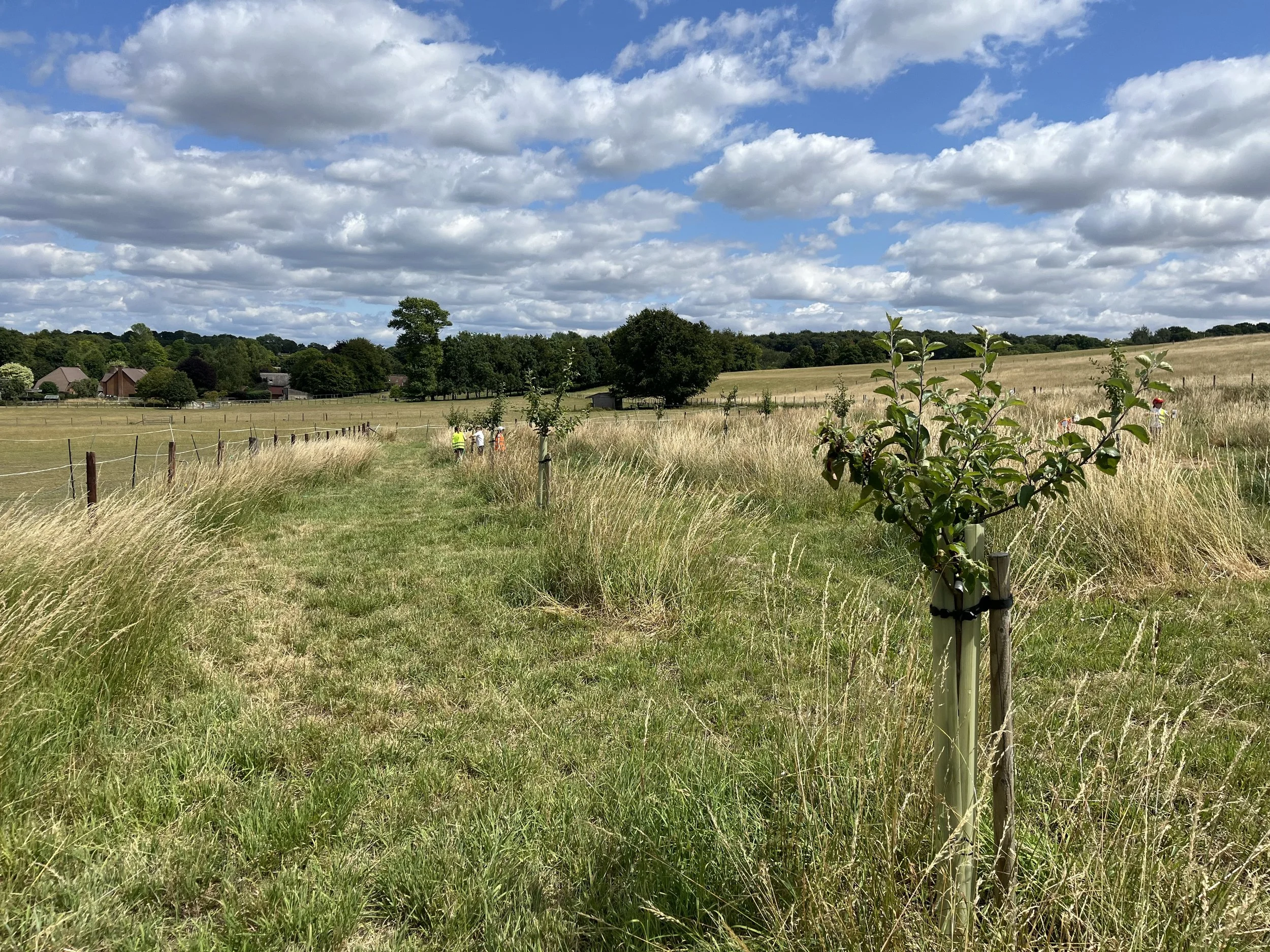
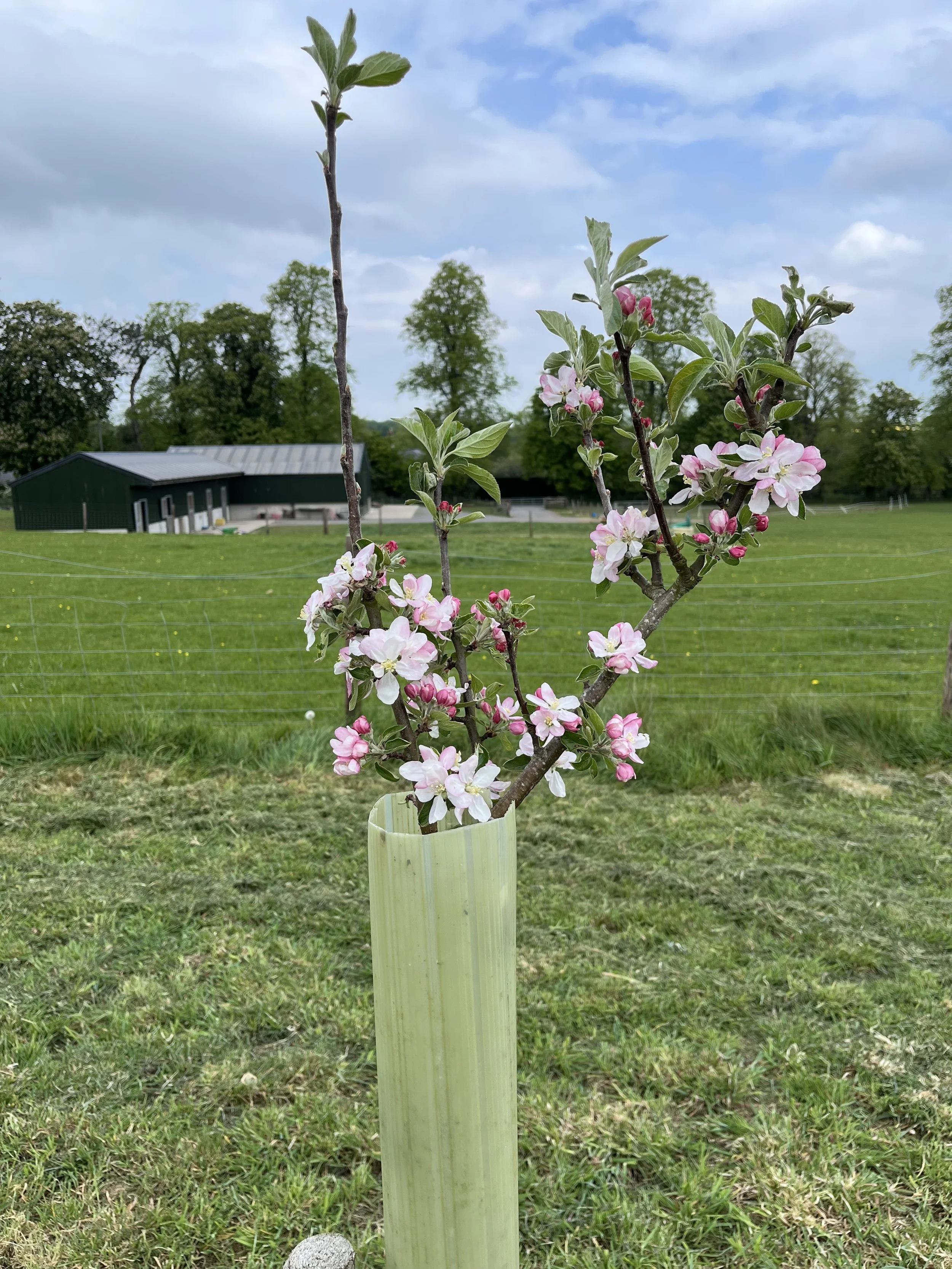
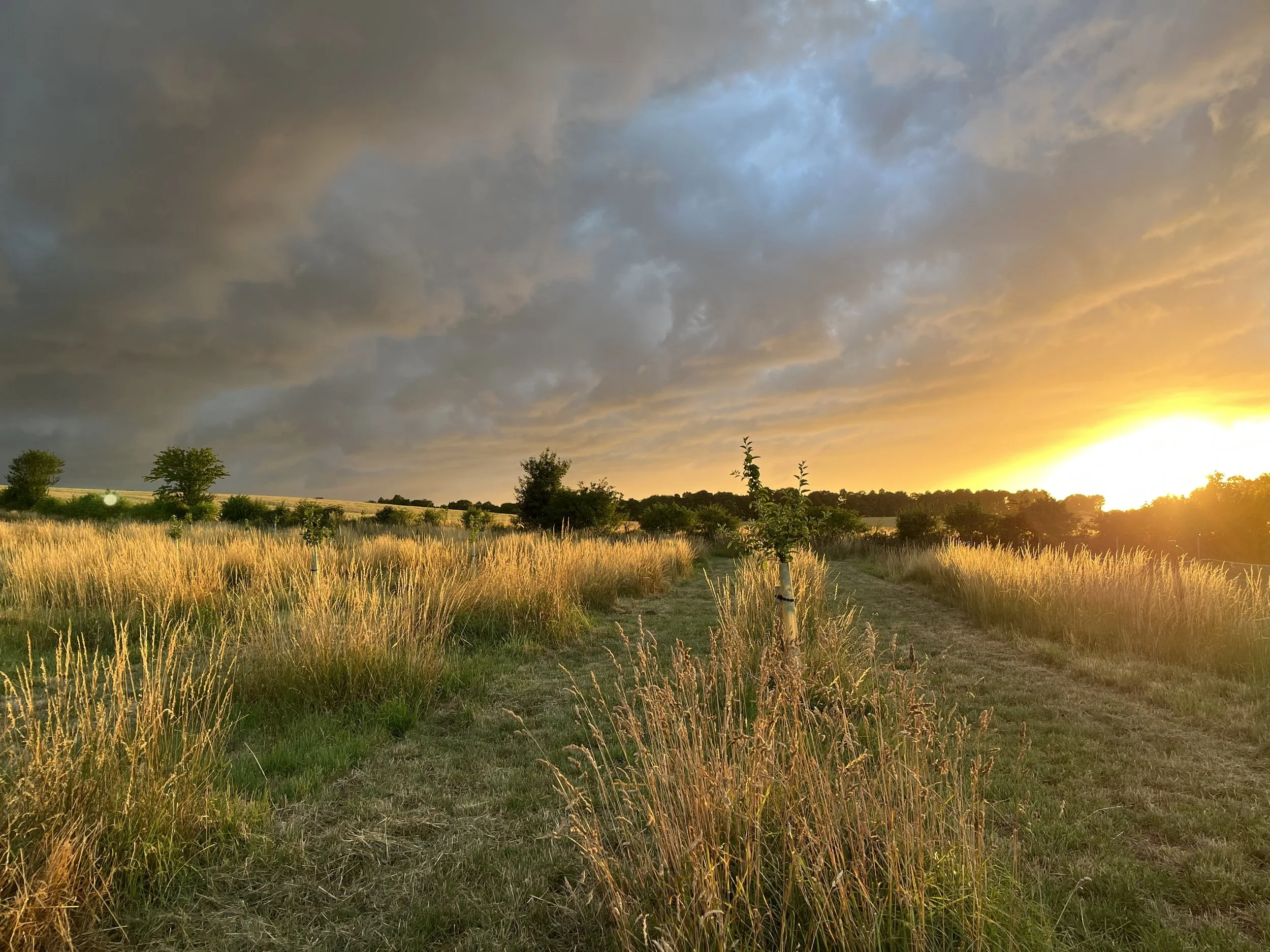
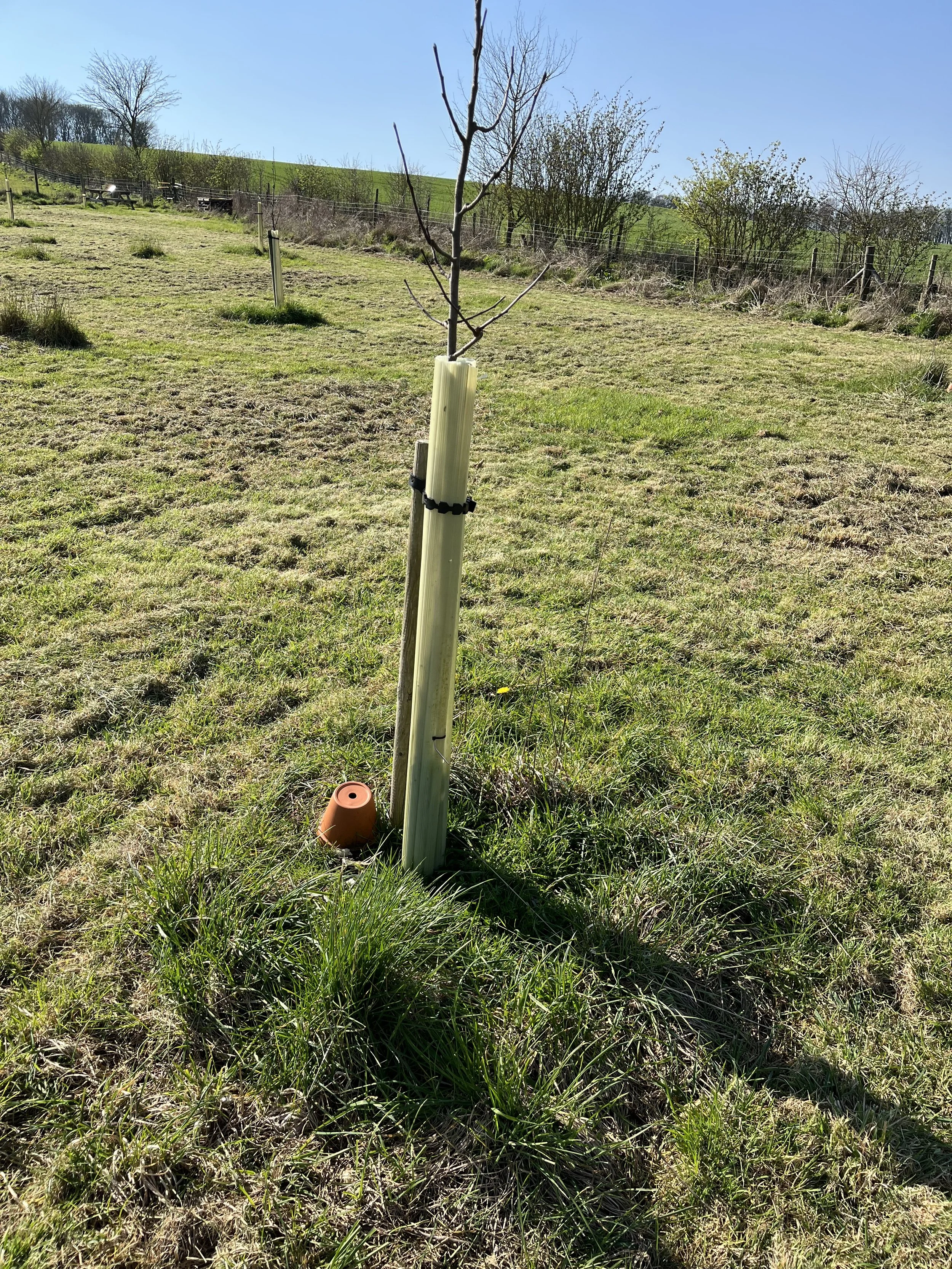
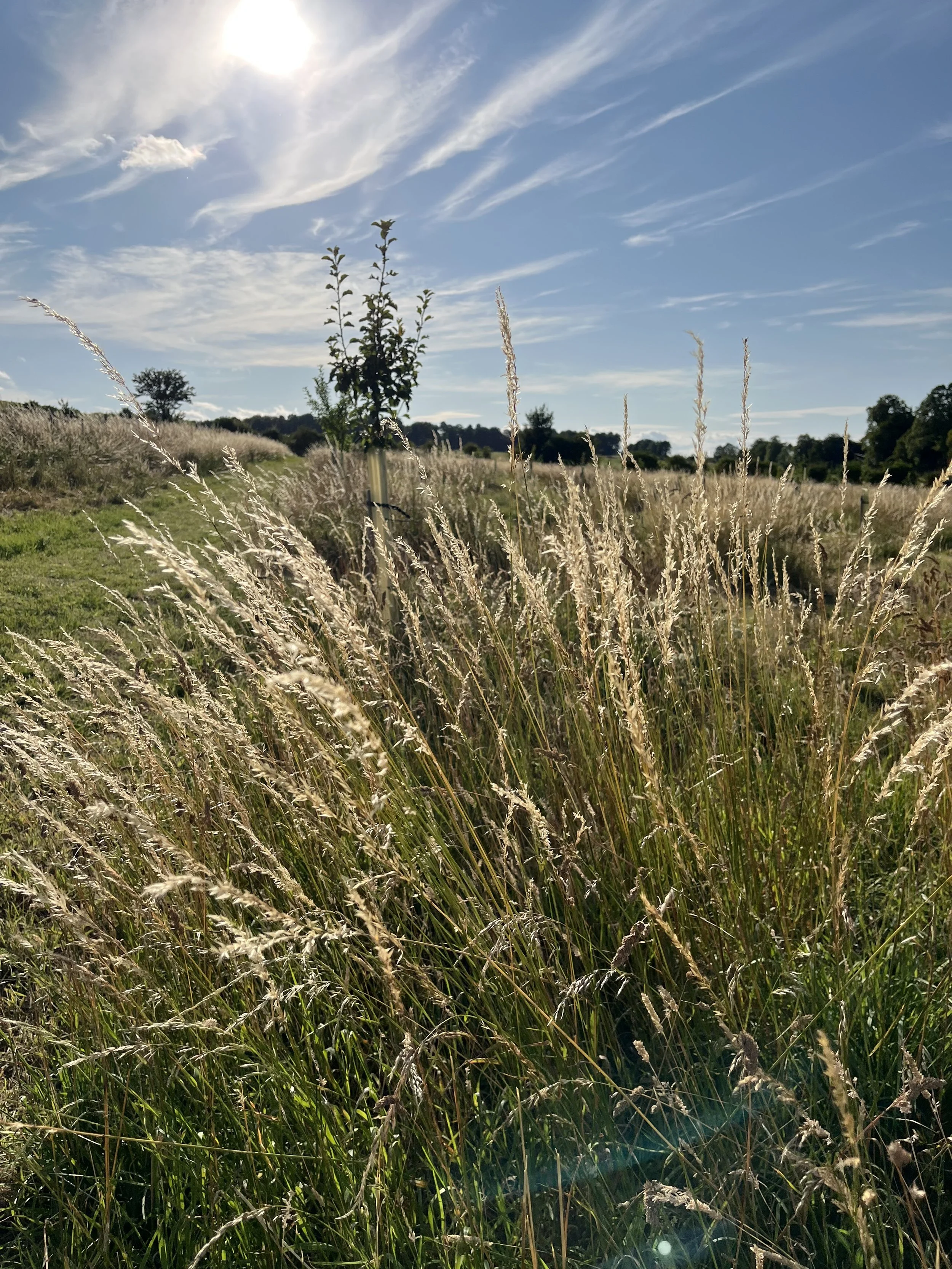
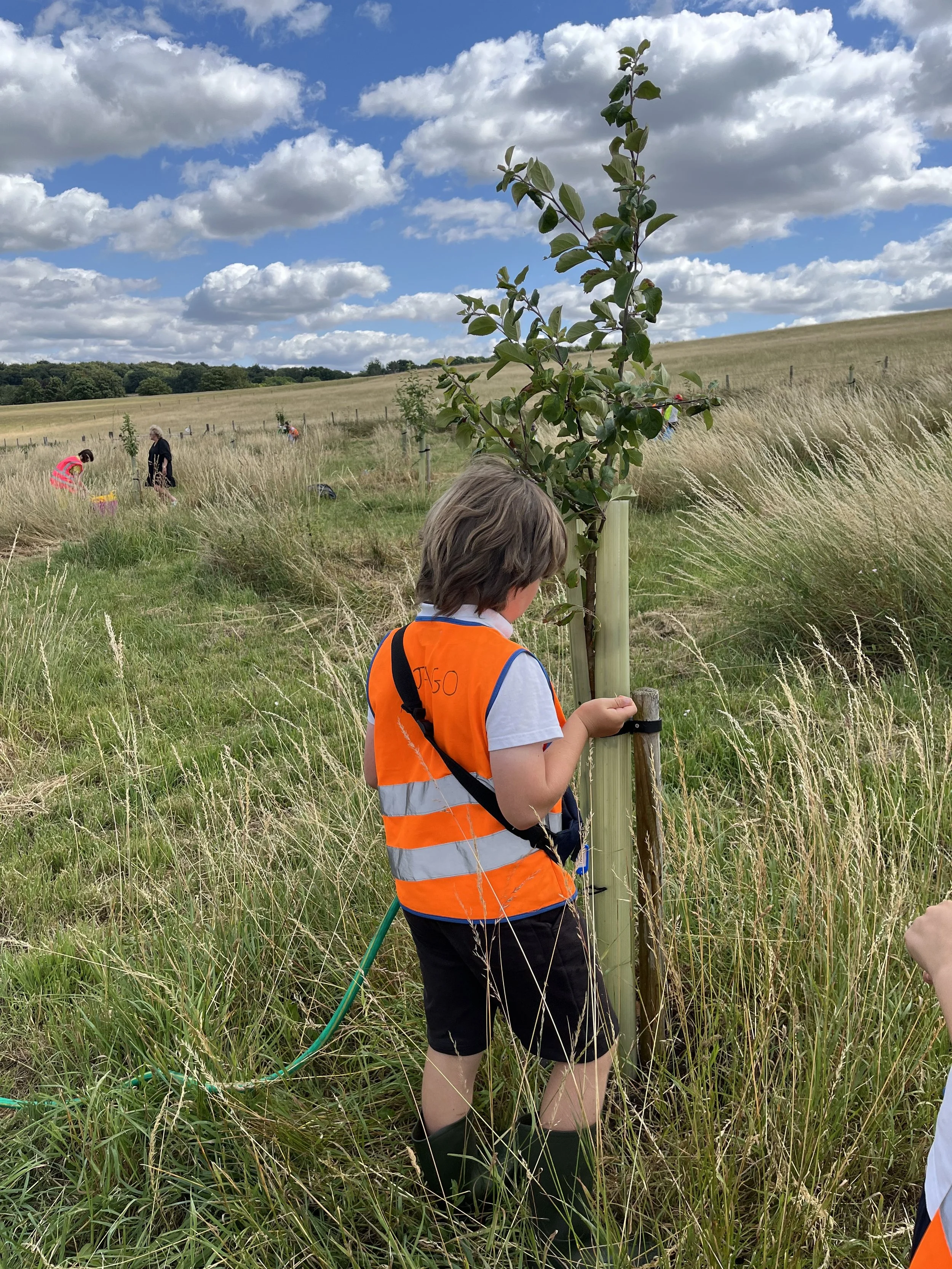
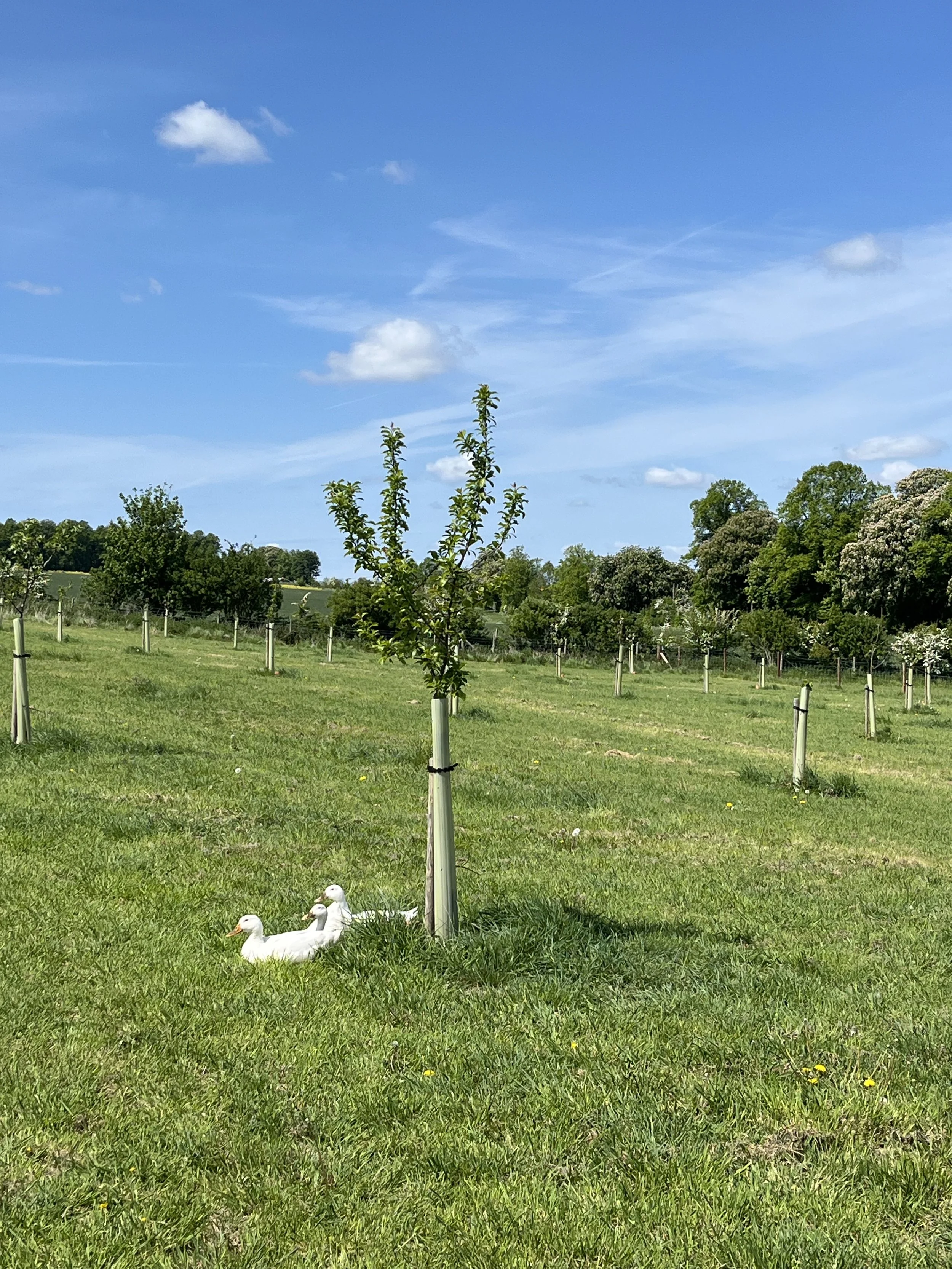
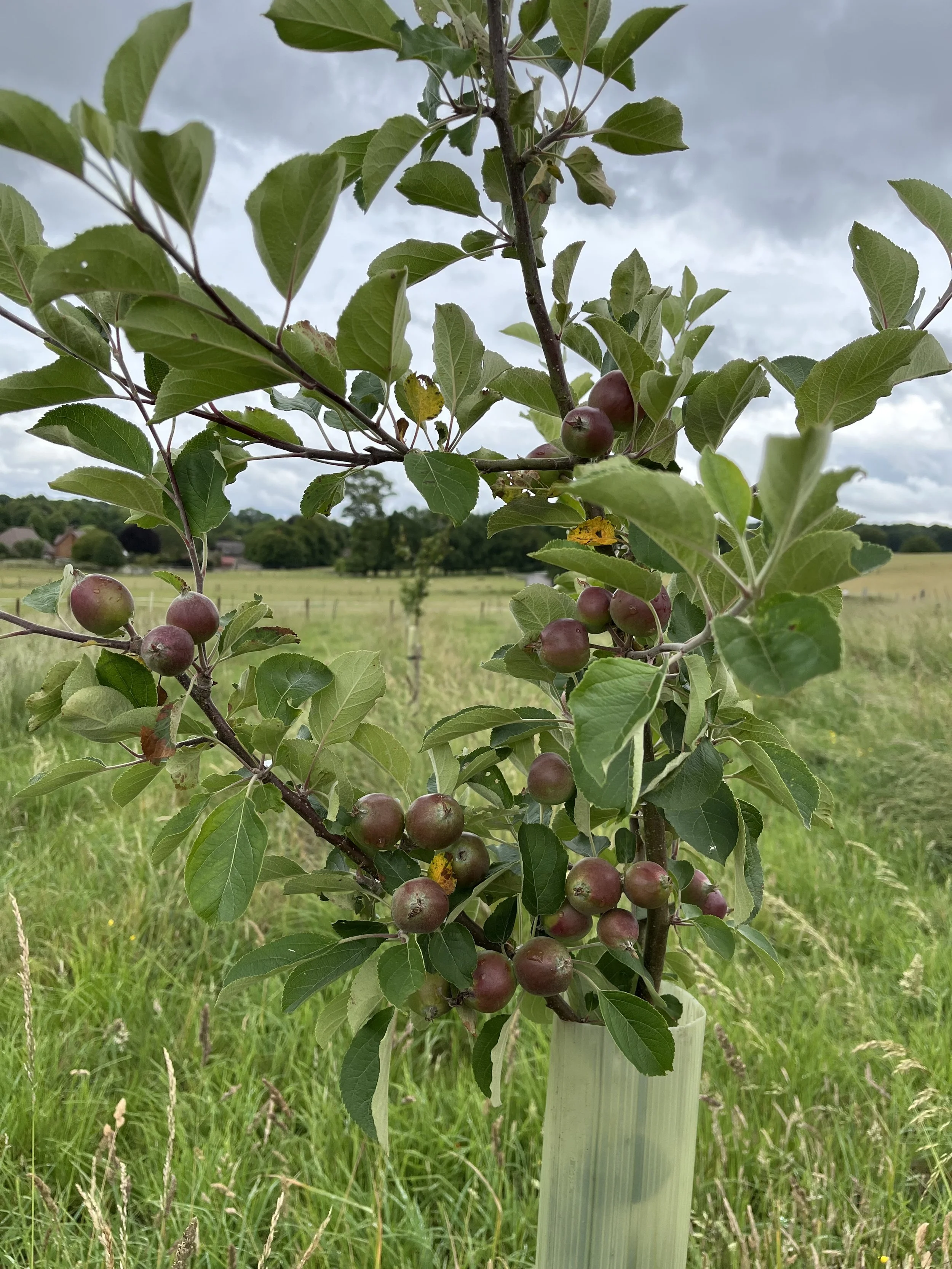
Andrew Howard, an orchard expert, carried out a survey of the farm and created a planting plan. This was based on several traditional cider varieties. The orchard was planted in the autumn of 2022. The trees are all large rootstocks and so will grow slowly and be large trees. They are mainly MM111 which will grow to about 4m tall and we have one M25 which will grow to about 6m tall.
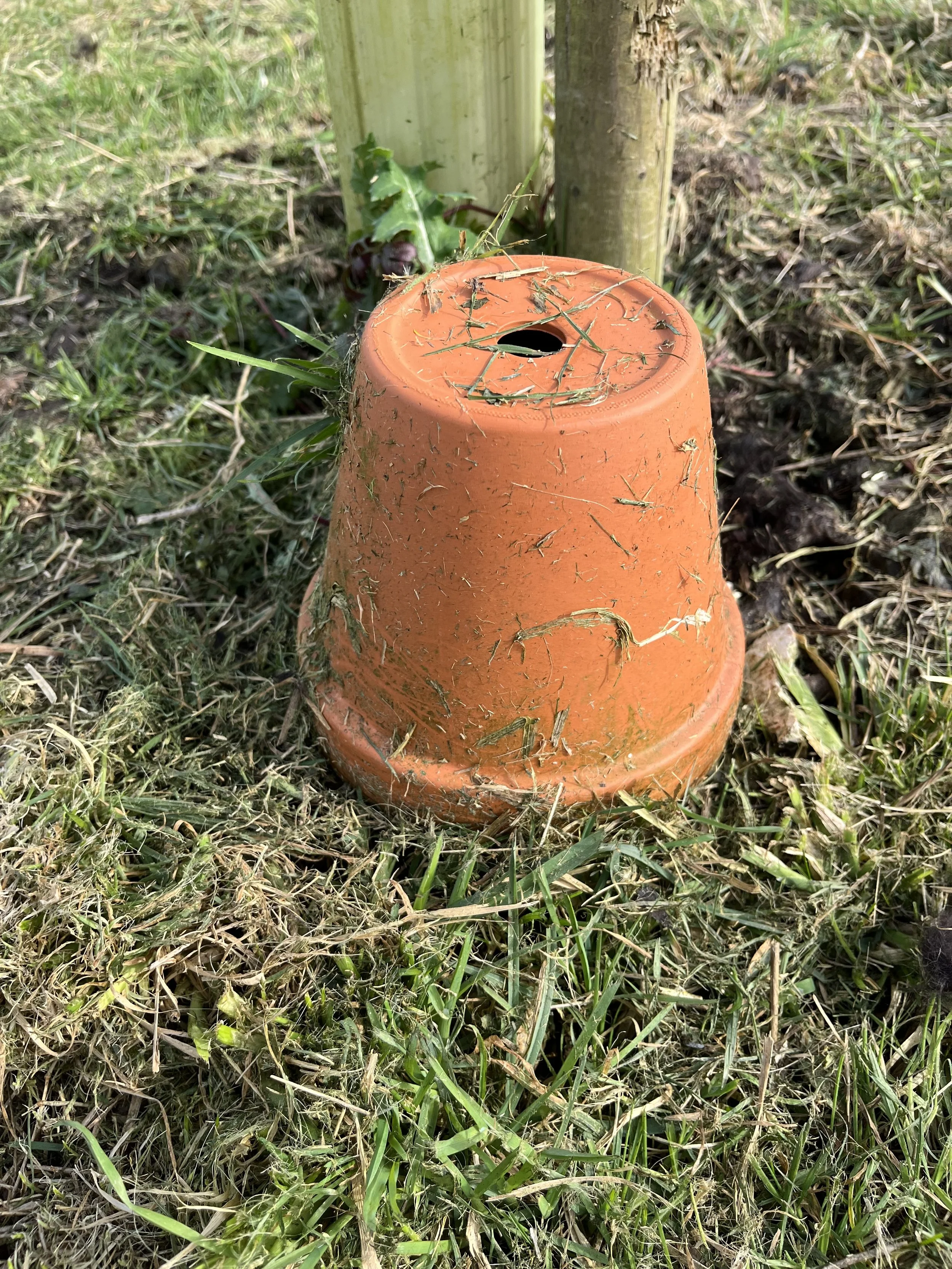
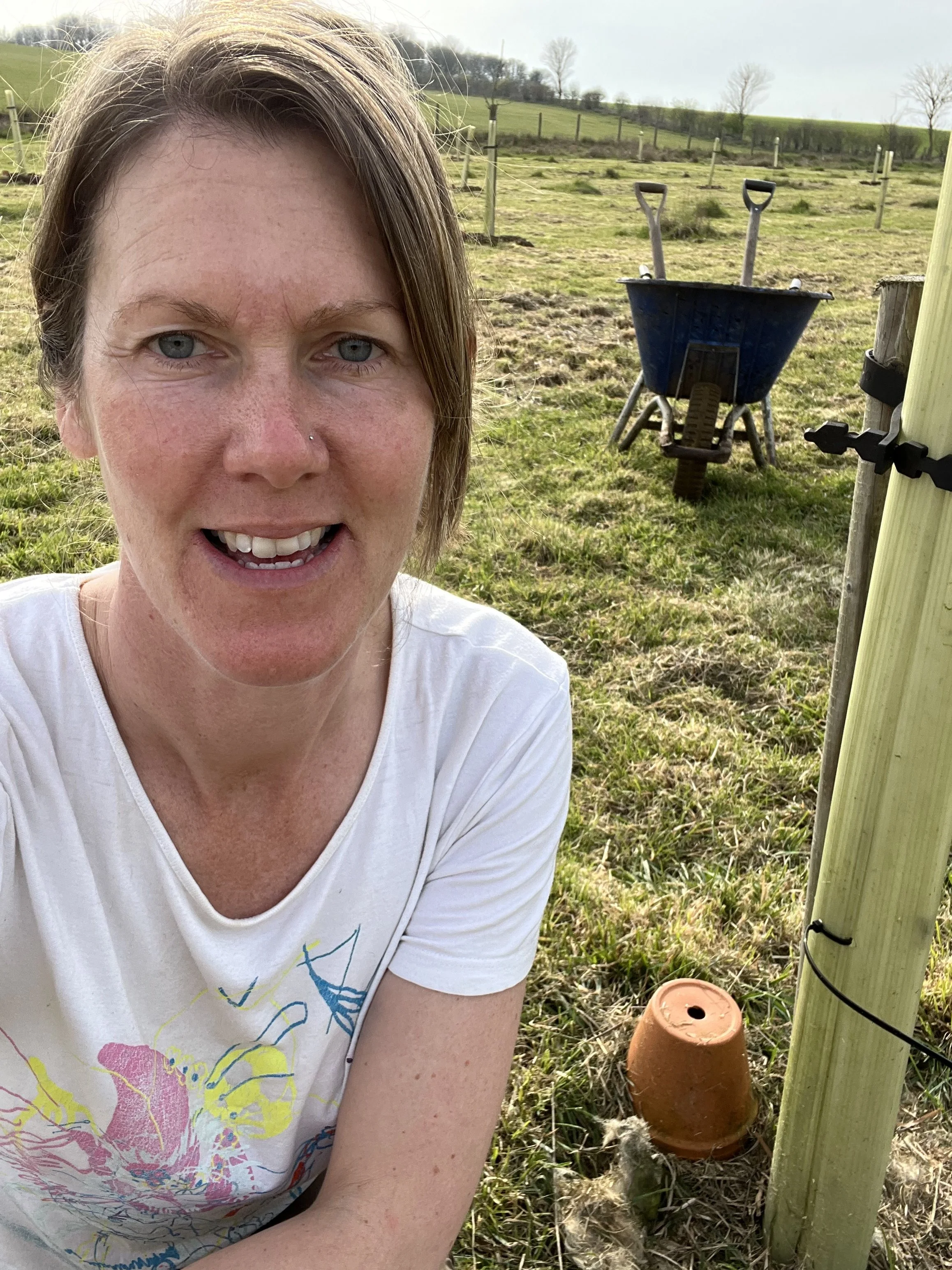
We manage our orchard as naturally as possible without pesticides and weedkillers. We have created earwig hotels for each tree. Earwigs are a fruit tree’s best friend as they are predators to all of the fruit tree pests! Our hope is that some earwigs move into these hotels and help us to naturally mange our orchard.
We have created a wildlife area in one corner of the orchard, near the hedgerow. Here we have a small pond, a woodpile, a stone pile and a large bug hotel made from pallets. We discovered a lizard in some rocks within this area in 2026, so it seems that our efforts to increase the biodiversity of the farm are working.
The orchard includes a range of trees which crop between August and November. This creates a more biodiverse habitat and will allow us time to collect and press the fruit throughout the autumn.
The trees in our orchard include:
5x Dabinette
5x Kingston Black
5x Yarlington Mill
6x Harry Masters Jersey
The rest are single varieties and include; Somerset redstreak, Dunkerton Late, Michelin, Pitmaston Pineapple, Pomerdy of Herefordshire, Ashmead Kernel, Chorister Boy, Profit, Payhembury, Dunkerton Sweet, Old Tankard, Hens Turd, Dredges Fame, Slack Me Girdle, Tom Putt, Court Royal, Camelot, Taylors, Ingalls Red, Tremeletts Bitter.
We have also planted a couple of perry pear trees; Green Horse and Blackney. Plus a Gorham pear and a Pitmaston Duchess pear. Finally we have a Twyford damson and an old green gage.
Sadly we lost the Isle of Wight Pippin in the first year, then a Victoria Plum in the second year. Luckily we haven’t lost any further trees yet, hopefully it stays that way.